.png)

1. Hi April! Please introduce yourself to those who might not know you.
Hey, I’m April Kae. Musician, bassist, and content creator. I write songs, produce music and visuals, and love performing live.
And I’m so excited that my first solo single “Bass Playing Girlfriend” drops Friday, November 14, exclusively on Bandcamp.
Have you ever caught feelings for someone right in the middle of a concert? That’s this song.
2. When did you first realize music was your path? Was there a specific moment or influence that solidified being an artist as your dream?
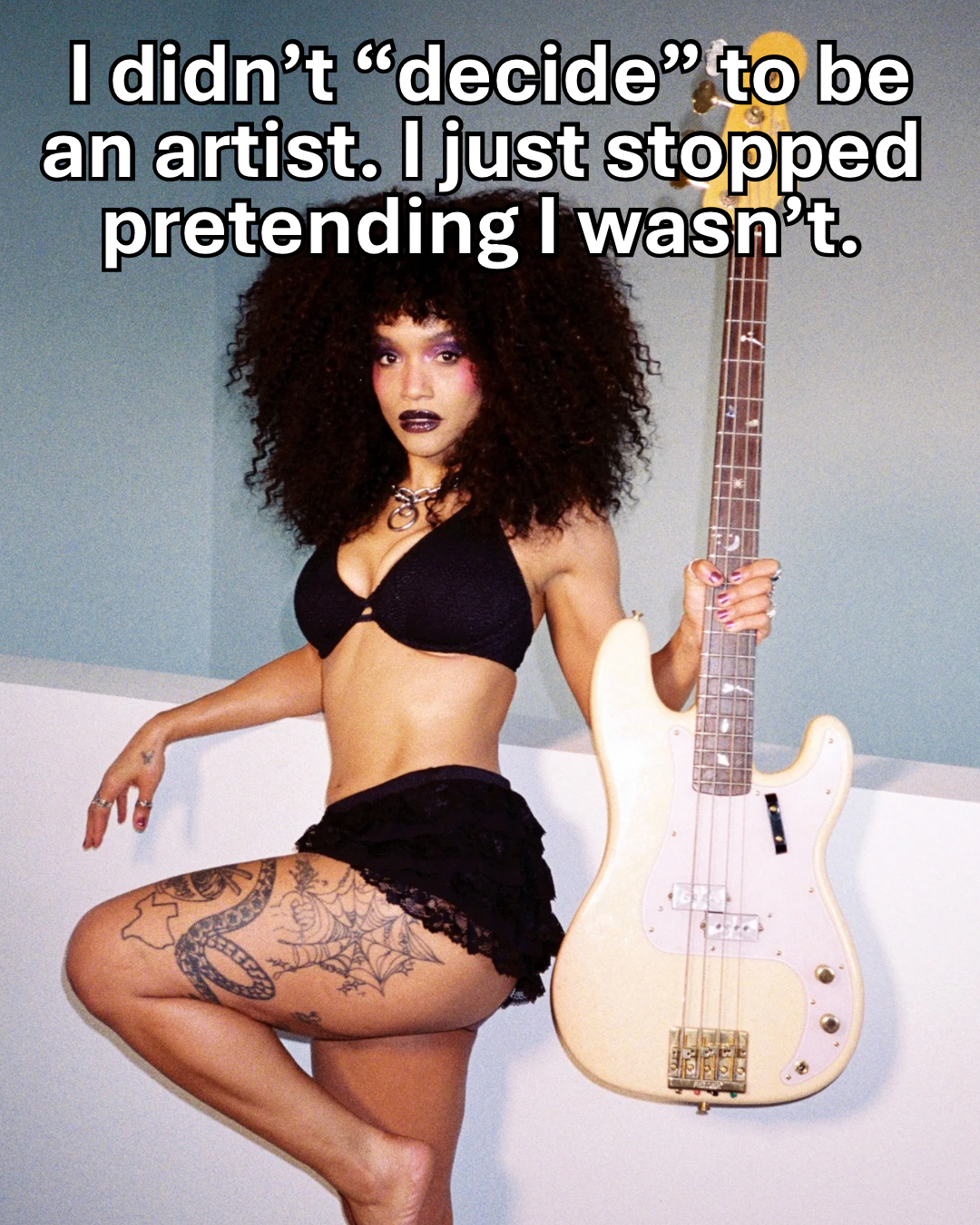
I didn’t “decide” to be an artist. I just stopped pretending I wasn’t.
I picked up the bass when I was 13 and never really put it down. I was always in bands, even while getting my economics degree and working jobs to hold it down financially for my loved ones.
Music was the throughline.
When I went viral during the pandemic, I finally had the chance to build a career around music.
Since then, I've been called a “bass virtuoso” by Alt Press and a “powerhouse musician” by Afropunk. I’ve been on the covers of Bass Player Magazine, Guitar Girl Magazine, KERRANG! (and now Gritty), performed at festivals like Download, Hellfest, and Rock am Ring with Fever 333, and even played Coachella with Saint JHN. I’ve collaborated with legends from Pardison Fontaine to Ricardo Arjona, and worked with brands like Fender, Nike, and Meta, all while building a community of over 2 million baddies.
And recently, I got the courage to step into my own voice as a solo artist, writing, producing, and releasing my own music.
It feels correct.
3. What's it like to be a part of the effort to create a supportive community for women in the music industry?
It’s everything. This industry wasn’t built for us, so we’re building our own table.
I’ve met so many incredible women, non-binary, and marginalized artists who’ve had to fight twice as hard just to be heard. Every time I get to connect with someone like that, it feels like we’re rewriting the rules together. Like we’re making space that didn’t exist before.
We’re building a world where we don’t have to explain ourselves before we play. Where we can be fully human.
4. Rock has long been a male dominated space. What has your experience been breaking barriers in that scene?
I walk into every room knowing someone’s going to underestimate me. That’s fine. I’m here to carve out my own space. I don’t need their approval or permission.
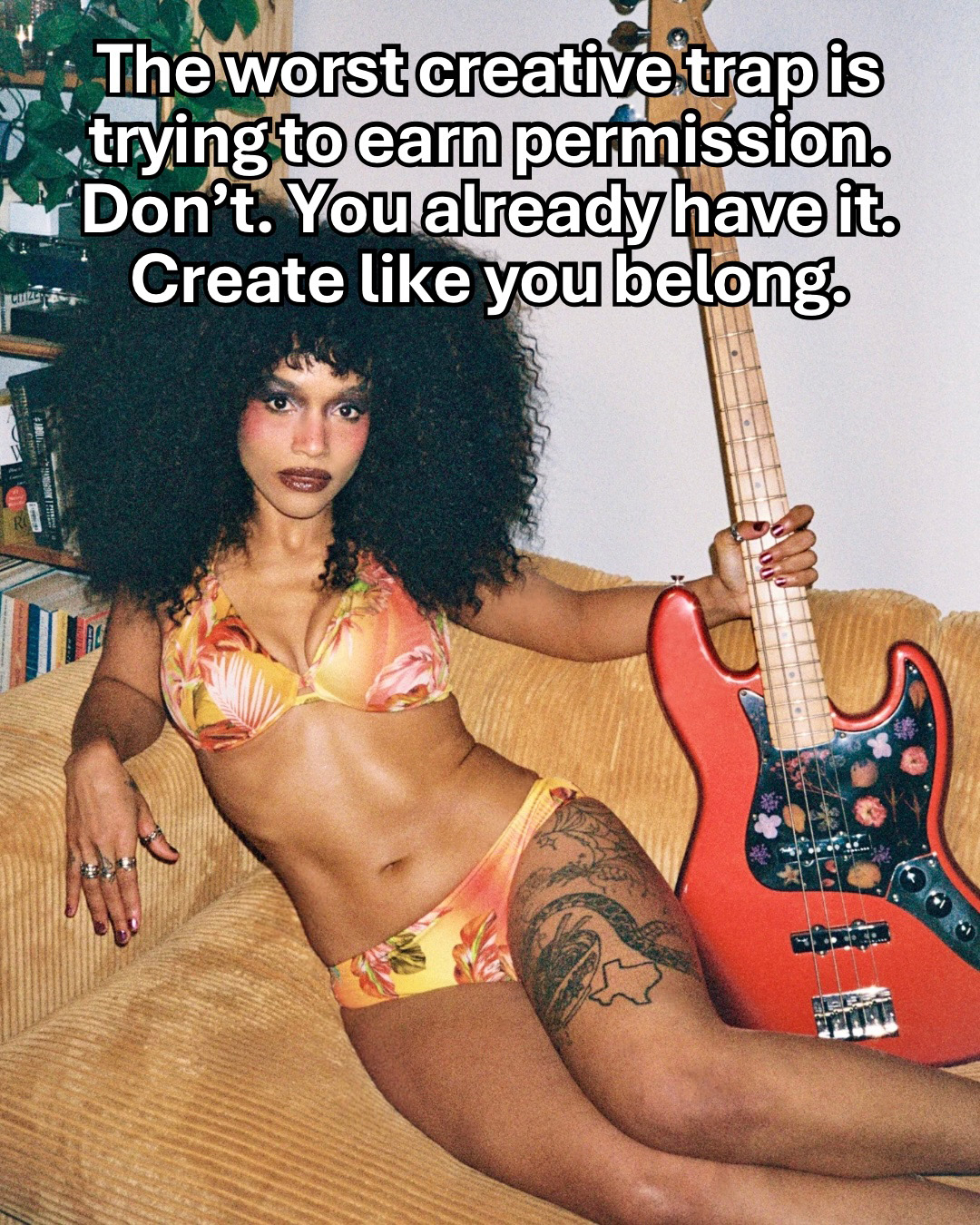
One of the biggest things I’ve learned is that the worst creative trap is trying to earn permission.
Don’t. You already have it.
Create like you belong.
When I stopped trying to prove myself and just started showing up as who I am, everything changed for me.
And now when I’m on stage, it’s my way of saying, “This is what rock looks like now. Deal with it.”
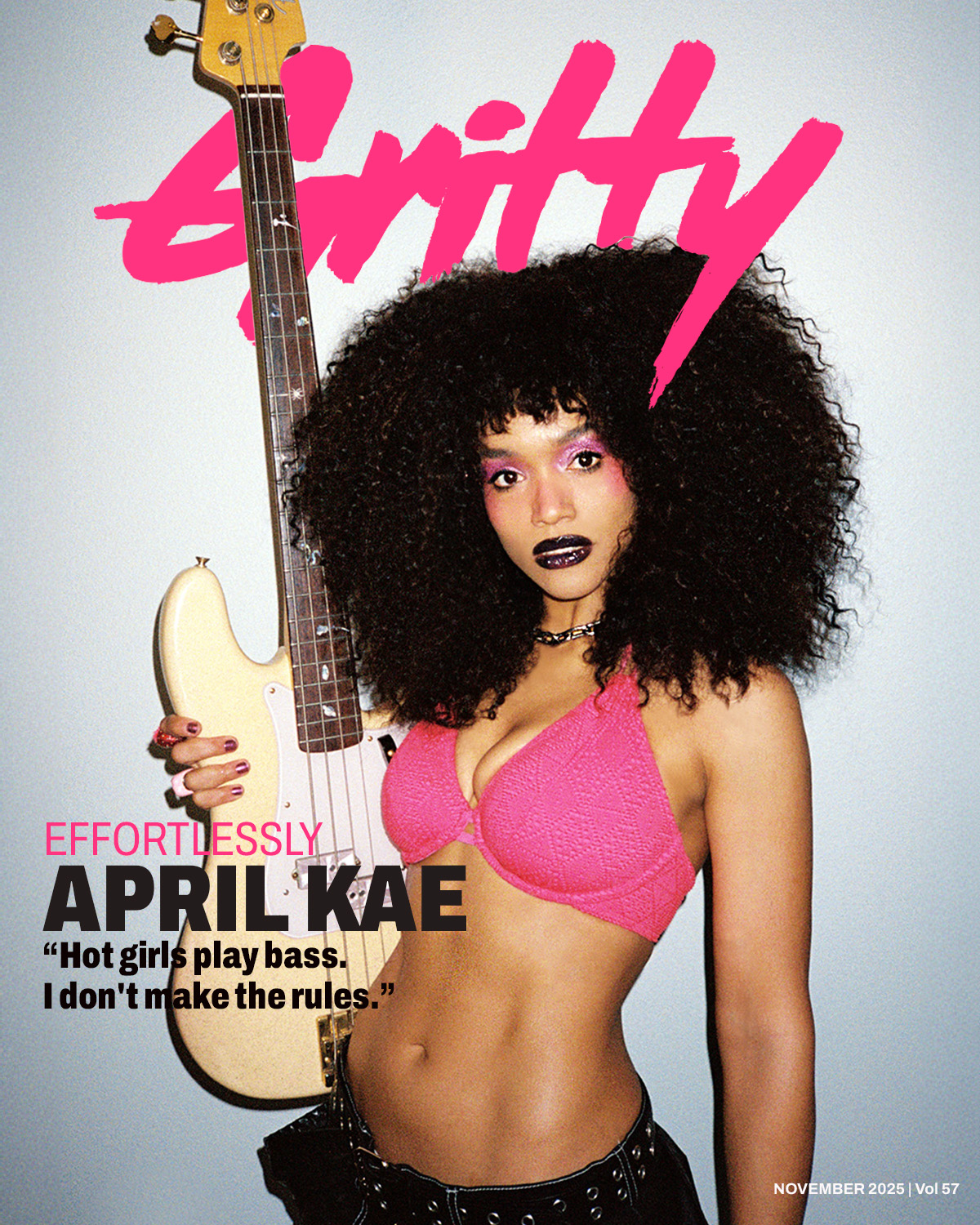
Hot girls play bass. I don’t make the rules.
What I really mean is: power and beauty aren’t opposites. These same hands that can shred a bass line can build a movement. When I say “hot,” I mean confident, alive, and unapologetically present in your own body.
Being seen doesn’t make you less serious. Being seen can make you finally feel whole.
There’s something powerful about not having to prove your power. That’s what “effortless” means to me. The kind of presence that comes from knowing who you are.
5. You joined Fever 333 in 2023, how did that connection come together?
When Jason reached out and asked me to join, I was at a point where I needed to be reminded of who the fuck I am: that my power didn’t have to fit inside anyone else’s mold.
Playing with Fever 333 rewired my brain chemistry. It gave me the space to channel the rage, joy, and rebellion I’d been holding in.
So much has changed for me over the past two years in surprising and beautiful ways, and Fever has been a huge catalyst and source of this change.
6. Fever 333’s music is such a powerful mix of punk, hip-hop, and activism. What’s it like performing songs that carry so much energy and purpose?
Playing with Fever feels like all the chaos in my life finally has a purpose.
I started organizing benefit concerts and protests when I was growing up, went to school for social work, and spent years working as a community organizer.
Music was always there, but I prioritized taking care of everyone else.
When I joined Fever, I realized I didn’t have to shrink anymore.
All that rage, joy, and heart I used to pour into community work, I get to channel onstage now, as well as in the community.
I don’t crave being liked anymore. I crave being understood.
And when the crowd screams Fever’s lyrics back, I know they understand exactly what we mean.
Every show is an exorcism. We’re letting it all out together.
7. Fever 333 has been crushing it on the Vans Warped Tour. What’s been the most memorable moment from the tour? Anything you’ve learned about yourself as a performer?
The moment we finished a set and a teenage girl came up crying, saying it was the first time she felt like she really belonged at a rock show. That’ll stay with me forever.
And I’ve learned I don’t have to earn space. I am the space!
The crowd comes most alive when I channel the messy, rebellious, chaotic parts of myself. The Warped Tour community and crowds are some of the most warm, fun, and supportive people I’ve had the pleasure of connecting with. The punk community really shows up. You feel it at Warped. In every city it’s passionate, chaotic, and weirdly wholesome. I love it.
I used to hide behind precision and hours of practice. But on this tour, I learned to let it all be messy and human.
8. The bass is often the heartbeat of a band. What’s your philosophy on rhythm and connection when you’re performing live?
If you think bass is just holding down the groove, you’re wrong.
When I’m playing live, I’m holding down the energy of the whole room.
The bass’s low frequency creates this connection between my body and the crowd’s bodies. It’s this palpable thing that physically ties us together.
I think of rhythm like empathy. It’s listening as much as leading. When Thomas and I lock in, we’re setting the pulse for everyone’s heartbeat in the room.
I want people to feel connected and remember they’re part of something bigger.
9. You’ve been teasing your solo music. What can fans expect from your sound and message?
For me, this new era is about claiming joy as rebellion. The songs I’ve been writing are bass driven, anthemic, and honest. Alt rock that makes you shake your ass.
I used to shrink to make others comfortable, now I’m allergic to small. If I wanna play bass in a bikini, I will. The skin, the curves, the chaos! Give it ALL to me! It’s ALL part of the music!
Titties out. Heart open.
My first single, “Bass Playing Girlfriend,” is sexy, cheeky, and unapologetically queer.
For the girls, gays, and theys who crush hard and mosh harder.
I’m always getting asked how I do many things: music, touring, content, style. But honestly, it’s not about doing more. It’s about doing what feels aligned. From there, everything else starts to feel effortless.
10. You’ve built a huge online platform. What originally inspired you to get into content creation?
At first, it was just a way to connect with other artists. To find community when I moved to New York City, and didn’t have one in real life.
I started posting from my bedroom because I needed to feel less alone.
And then I started getting messages saying, “You made me feel seen.” I knew I had to keep going.
It’s wild, because all these years later, ultimately, for me, social media is still about connecting with community.
To remind folks, especially queer, neurodivergent creatives, that your weirdness is magic, and that there’s room for all of us at the table.
11. Which artists helped shape you as an artist, not just musically, but emotionally or aesthetically?
Prince taught me that genre and gender are fake.
Bikini Kill taught me that rage is a love language.
Beyonce taught me that world-class musicianship can be playful.
Joan Jett taught me how to be fearless in my femme.
Jimi Hendrix taught me that imperfection can sound like truth.
Missy Elliott taught me that innovation and weirdness are power.
Haley Williams taught me how to turn anger into poetry.
Chaka Khan and Betty Davis showed me what it means to own your sound and aesthetic.
I’m also shaped by every queer artist who has dared to be visible when it wasn’t safe. They cracked the door open. I’m here to kick off its hinges.
12. If you could collaborate with any artist, past or present, who would it be?
I wanna scream with Amyl and the Sniffers. But also? Give me a studio day with Willow Smith, Nova Twins, and St. Vincent, and let’s melt some faces.
Imagine a song written with Cyndi Lauper, Debbie Harry, and me, produced by Pharrell and Linda Perry. Chappel Roan and Olivia Rodrigo for the pop hooks. Brittany Howard and Slash for the shredding. Chaka Khan and Santigold adding vocals. Garbage and Heart musical directing. Let's go!!!!
Really, I just wanna make noise with artists who get it. Who know music can punch you in the gut and still heal you.
13. What would the movie of your life be called, and who’s starring as you?
“Bass Playing Girlfriend” or “Crying in the Moshpit”
(Are those also the names of my first two singles? Maybeeeeeee!)
Music by me, costumes by Vivienne Westwood’s ghost.
There are so many amazing actors who I think could capture my combination of vulnerability, rage and humor, and I’d love to see any one of them shred the bass and belt a rock track.
A few off the dome: Zoe Kravitz, Zazie Beetz, and Tessa Thomson. Badass goddesses.
14. What’s a musical achievement from this past year that you’re proud of?
Releasing "Bass Playing Girlfriend" on my own terms, with videos featuring people from my actual community.
No budget. No big label machine.
Just love, sweat, vision, and community.
15. What’s next?
I’m building a world! More singles! More visuals! More shows!
This next chapter is about connection, not perfection.
And I’m bringing everyone with me, especially the weirdos, lovers, punks, and dreamers.
You don’t have to fit in. You just have to show up.


